RFID
Name / Scientific name
003
Cucurbita
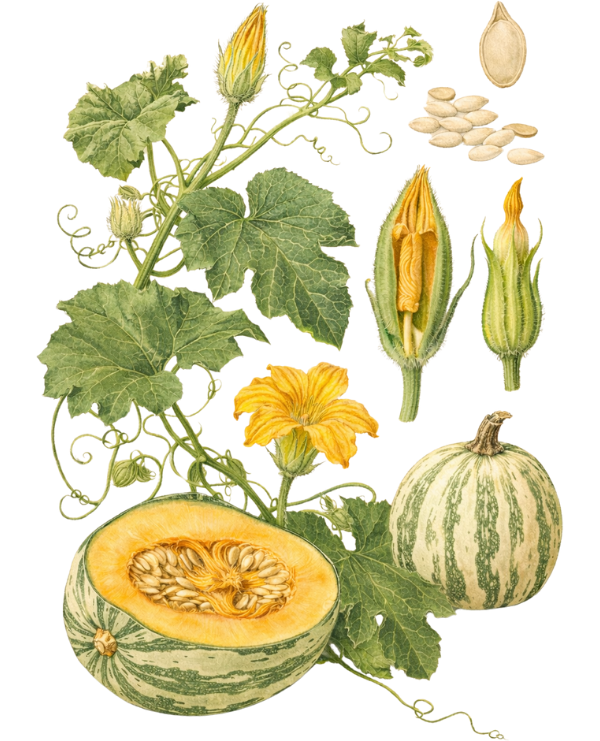
Calabaza is a helper plant in the Milpa system.
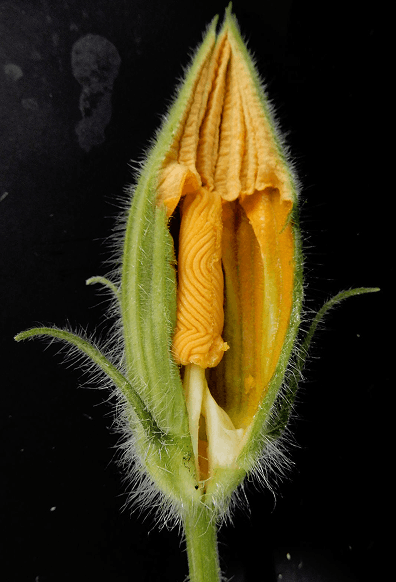
It grows low and outward, spreading its vines across the soil between taller crops. In doing so, it guides climbing plants like beans or cacahuate and protects the ground with shade, helping the milpa retain moisture and stay alive. Calabaza stays close to the earth. Rather than growing upward, it expands horizontally, covering the surface with broad leaves and long vines. It produces large, edible, bright yellow-orange flowers. Male flowers appear first, producing pollen, and are often harvested for food. Female flowers follow, each marked by a small swelling at its base. When pollen reaches them, that swelling slowly grows into the calabaza.
Within the milpa, calabaza leaves shade the soil, slowing down evaporation and softening the impact of the heat, which can be harsh in the semi-arid landscape of Tonahuixtla. In this naturally cooperative system, maíz grows vertically and is picked by reaching upward, frijoles are gathered along the stalks, and calabaza waits low to the ground.
‘Flor de calabaza’
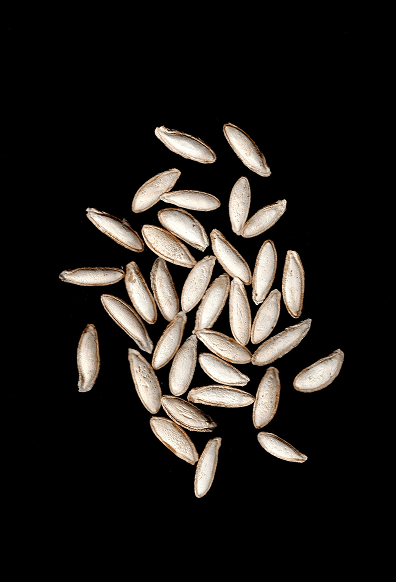
Calabaza seeds
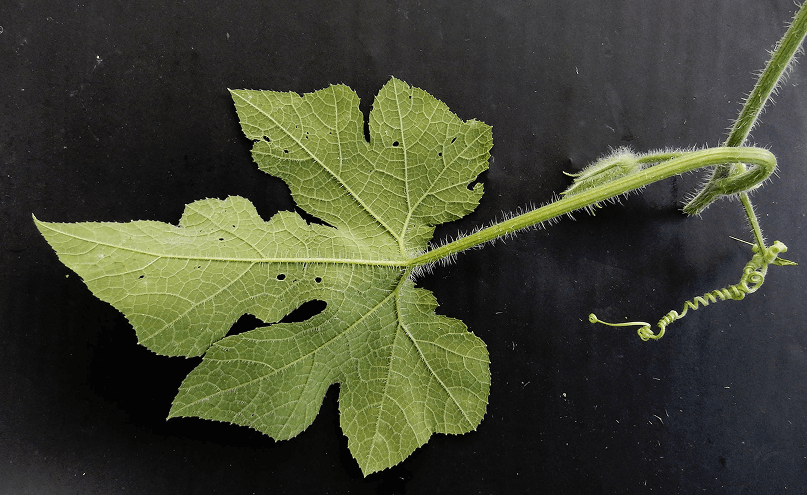
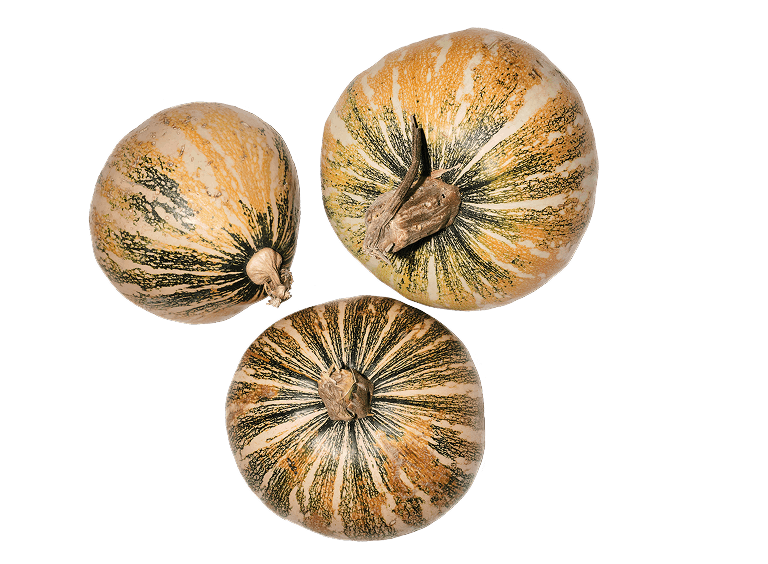
Calabaza appears in an astonishing range of colors and forms. Some are round and pale, others long and uneven.
Some stay small and tender, others grow heavy and dense with time. Their skins shift from soft green to deep yellow and mottled orange, sometimes smooth, sometimes marked with grooves or small bumps. Calabaza can be grown for its flesh, its flowers, or its seeds. The plant is generous: nearly every part is edible, and each stage of growth finds its own particular use.