RFID
Name / Scientific name
008
Solanum glaucescens
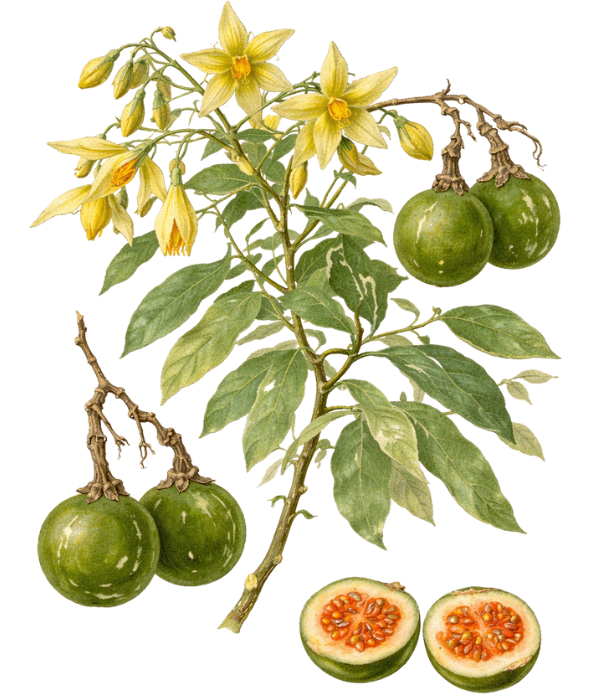
The cuatomate is a wild plant native to the Mixteca Baja region of Puebla.
It is slowly being domesticated, grown in family milpas and household gardens for personal consumption. Its fruits are small and round, ripening along slender vines in a range of colors, from green speckled with white to orange-red.
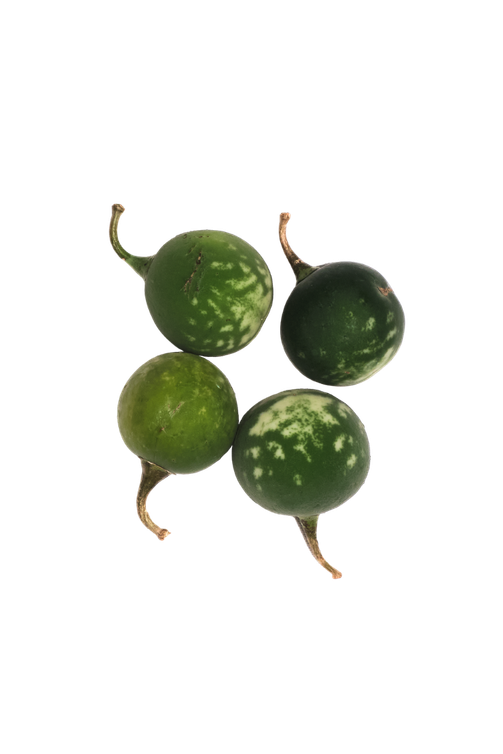
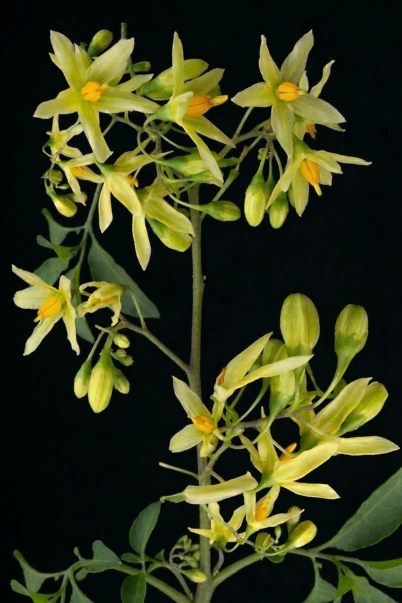
Botanically, cuatomate belongs to the nightshade family (Solanaceae), the same group as tomato, chili, and tomatillo.
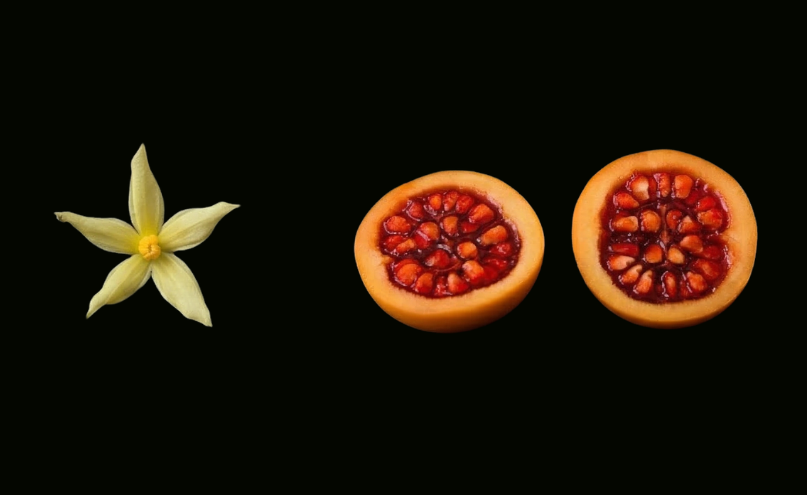
Cuatomate flowers appear as delicate yellow stars, later giving rise to the plant’s bright orange fruit.
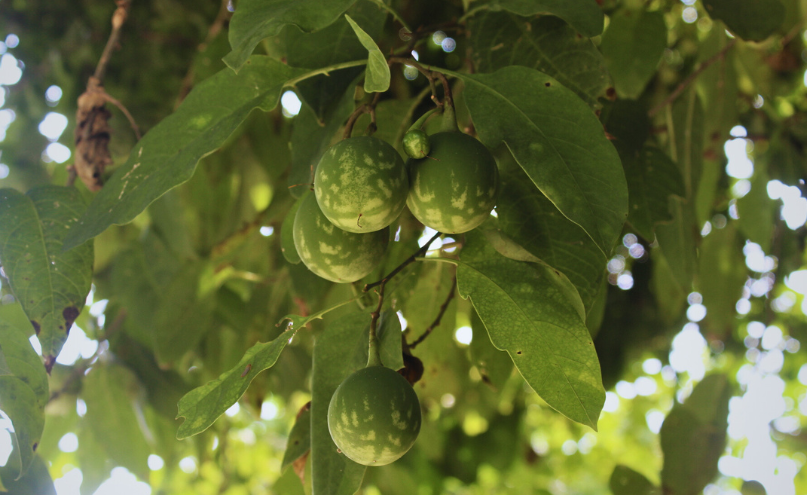
The plant grows as a hardy, semi-climbing subshrub, adapted to dry forests and scrublands. It requires little water and often survives without irrigation, producing fruit even under harsh conditions. In communities such as Tonahuixtla, cuatomate is part of the intimate ecology of the home.
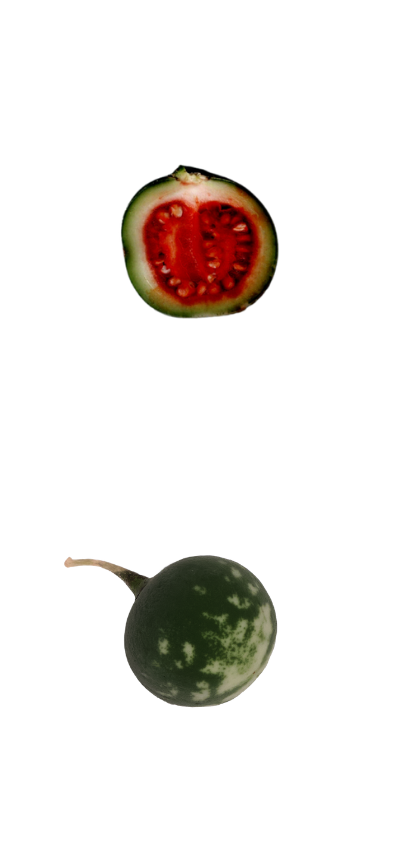
Cuatomate; tomate silvestre; tomatillo cimarrón
Its fruit shares their essential character: soft flesh, fine seeds, and a bright acidity.
In the Mixteca, it is used in much the same way, ground into sauces, cooked in stews, or combined with chiles to accompany meat and tortillas. Its small yellow flowers are also used in chilate, a thick stew to which they lend a subtle bitterness and depth.
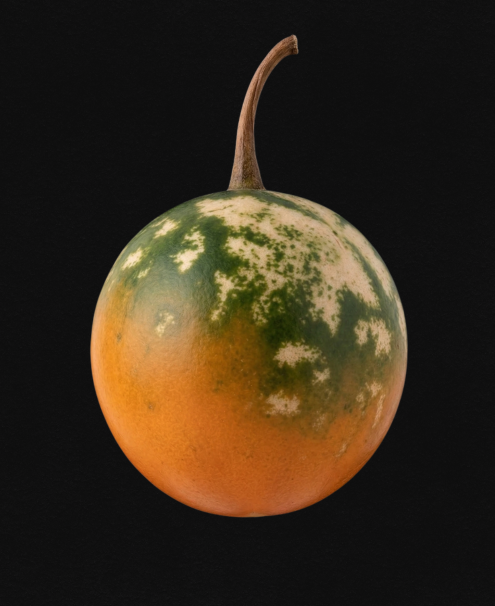
The fruit turns orange during ripening as carotenoid pigments develop, helping attract animals that spread its seeds.