RFID
Name / Scientific name
006
Leucaena leucocephala
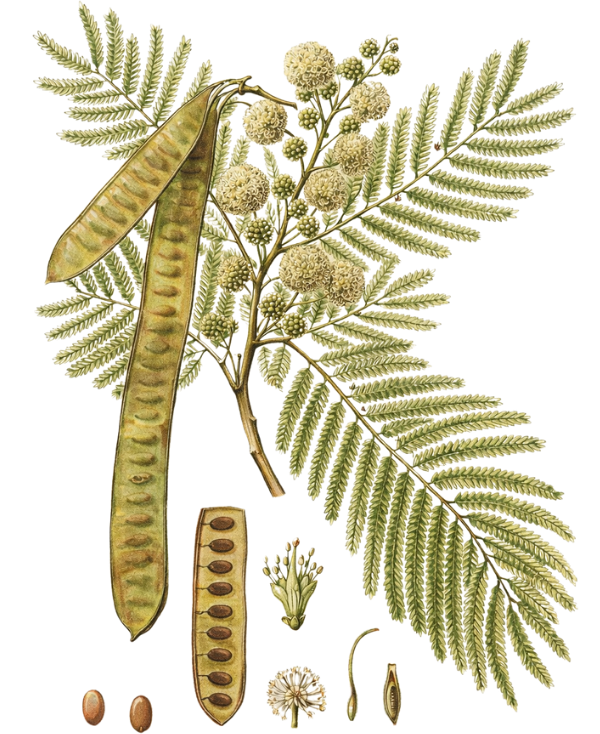
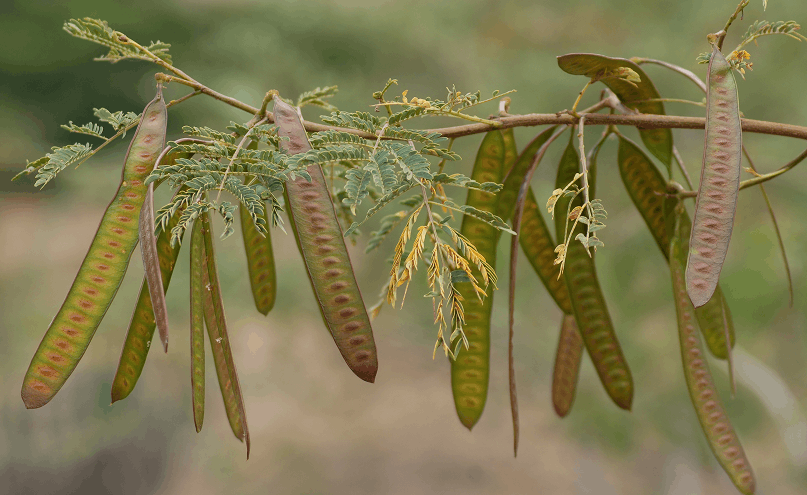
This small tree, easily recognized by its long, hanging green pods, is deeply rooted in daily life across southern and central Mexico.
Guaje trees get their scientific name from the Greek leukos, meaning “white,” because of their hundreds of small white flowers in spherical flowerheads that give way to the slender, aromatic pods that define the species. Hardy, fast-growing, and drought-adapted, guajes grow along dry hillsides, footpaths, and milpas, thriving where soil is thin and seasons are harsh.
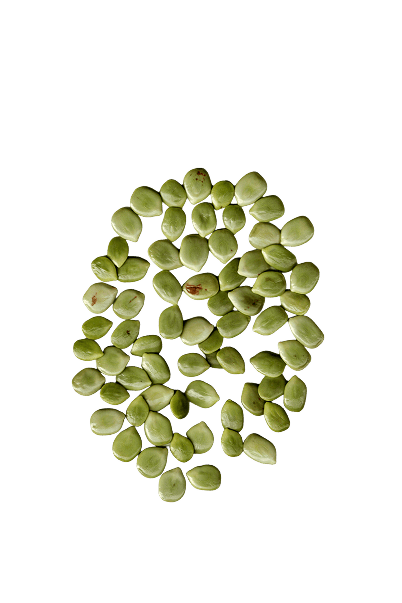
Fresh seed from Guaje
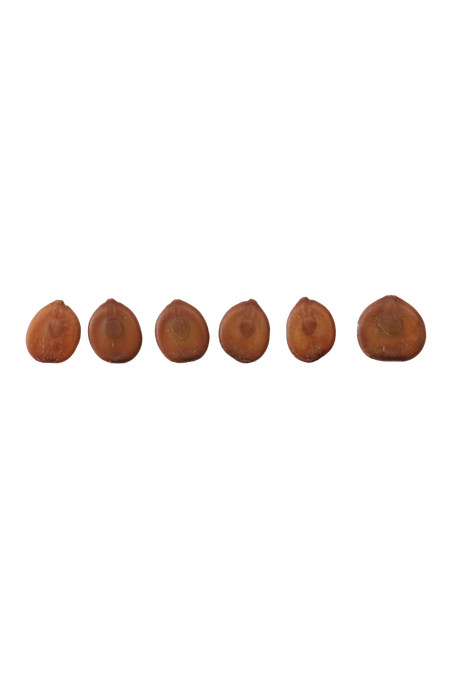
Dry seeds from Guaje
These trees are now widespread throughout the tropics, but guaje remains culturally tied to the landscapes of the Mixteca. The seeds have a sharp, unmistakable aroma. They are green and tender when young and become reddish and resinous when mature. Their flavor is grassy, nutty, slightly pungent: a note that immediately signals home for many people who grew up here.
OTHER COMMON NAMES / ENGLISH COMMON NAMES
Huaje, river tamarind, wild tamarind, white leadtree, white popinac, horse tamarind
Huaje, river tamarind, wild tamarind, white leadtree, white popinac, horse tamarind
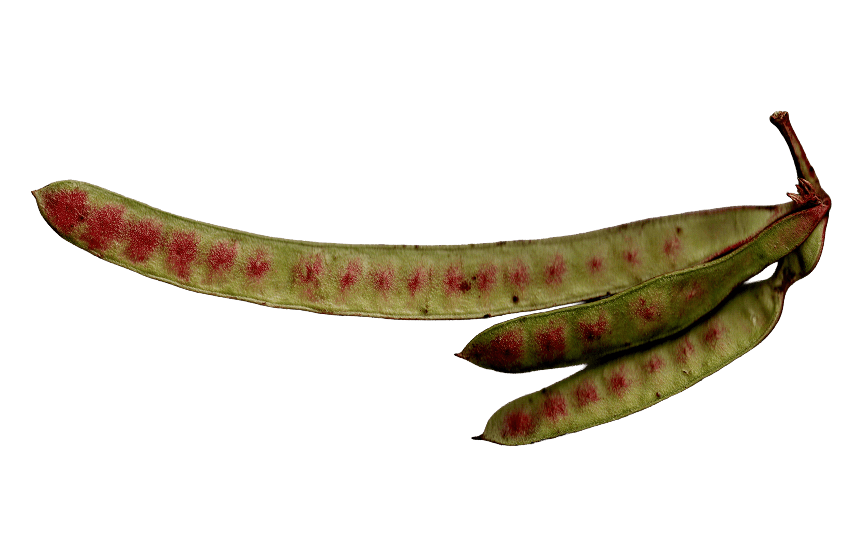
The tree is also appreciated for its practical roles: improving depleted soils, offering light shade, feeding animals, and marking boundaries in communal fields. The dry pods even become simple toys for children: the rattle of guaje seeds brings back childhood memories.
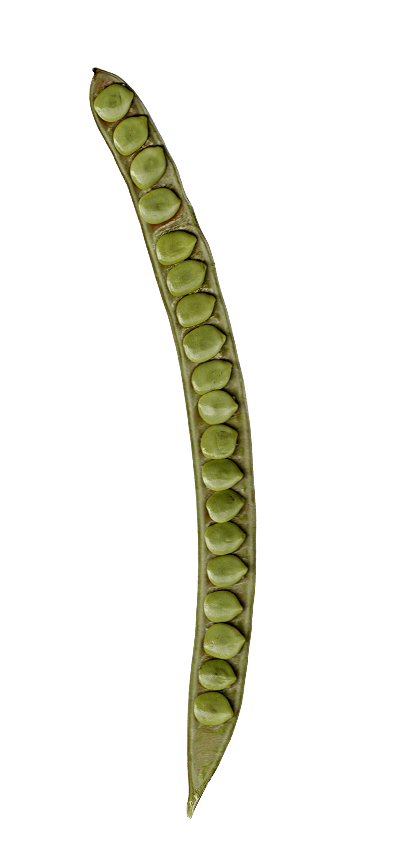
In Tonahuixtla, guaje is gathered in the late rainy season when the young pods are full but still soft.
The pods are split and the seeds mixed into everyday dishes like huaxmole, toasted and eaten as snacks, or ground into salsas.
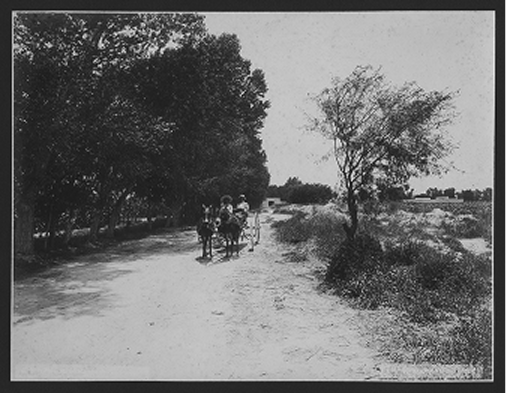
Guaje grows throughout central and southern Mexico, particularly in Oaxaca, Guerrero, and Puebla.
Puebla, Mexico 1905-1910.
Puebla, Mexico 1905-1910.