RFID
Name / Scientific name
011
Aloe vera (l.) burm. f.
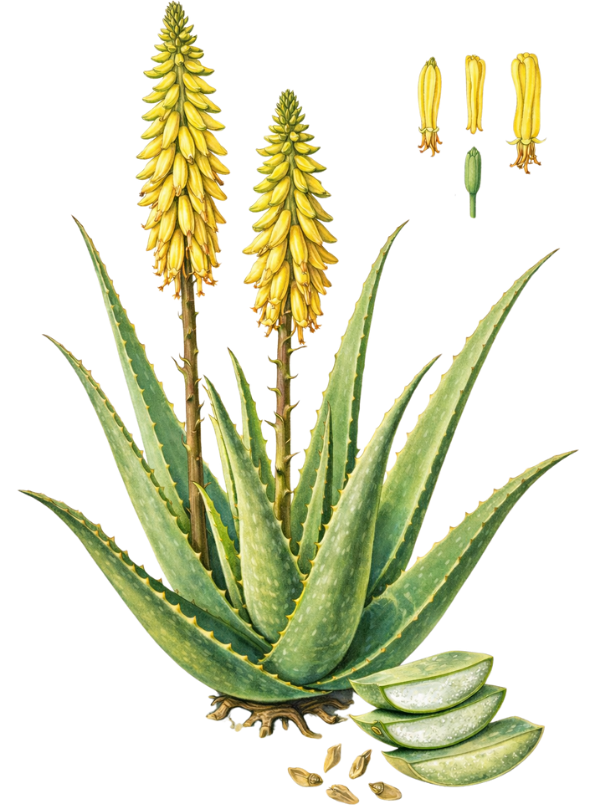
Botanically, aloe is a succulent adapted to arid climates.
Even though this plant is native to the Arabian Peninsula, aloe was introduced into Mexico centuries ago and has since become naturalized, embedding itself deeply in everyday life in places like Tonahuixtla. Its presence reflects a long history of botanical exchange between distant drylands.
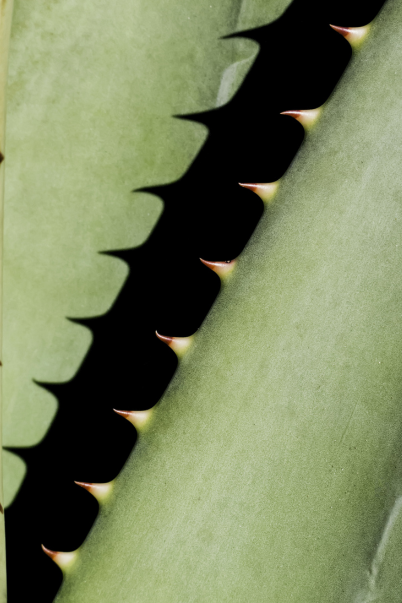
Fine marginal spines run along the edges of aloe vera leaves, serving as a natural defense from herbivores.
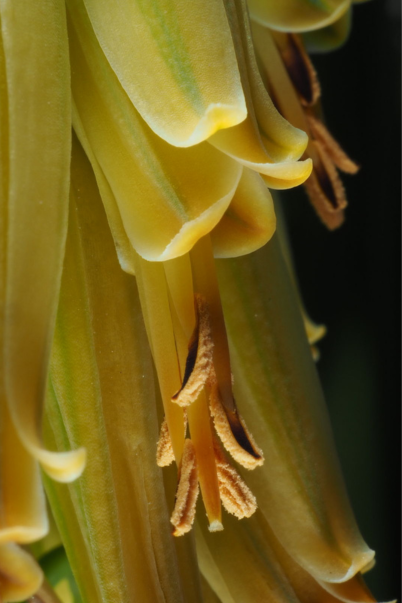
Detailed close-up of the Aloe vera flower.
Aloe grows as a rosette of thick, fleshy, pointed leaves rising directly from the ground, closely resembling a small maguey or agave, and is often mistaken for one in Mexico.
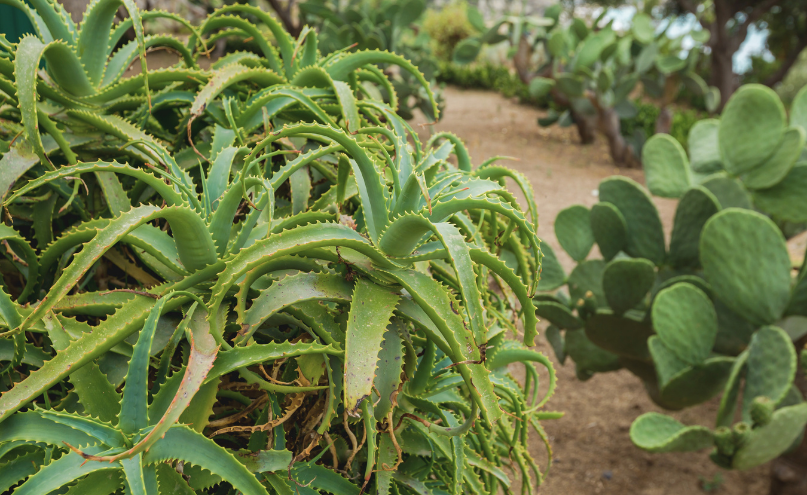
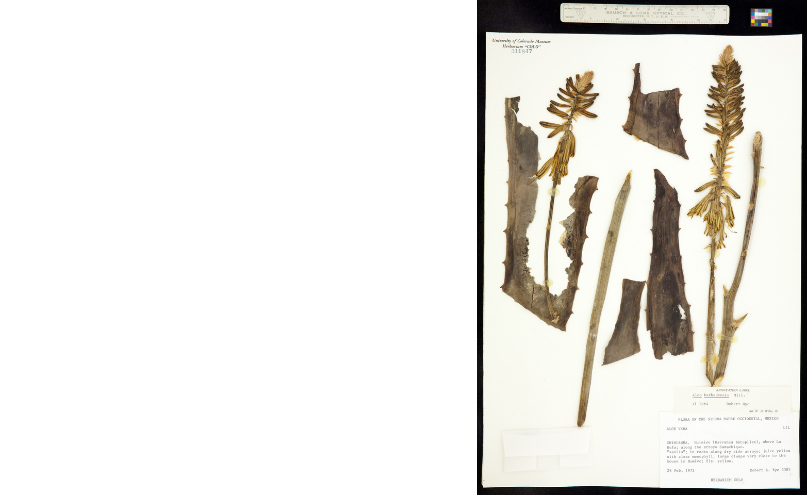
Botanically, aloe is a succulent adapted to arid climates. It stores water in its leaves, allowing it to survive long periods of drought. It grows easily in poor, rocky soils and requires little care, spreading slowly through underground shoots. Its resilience, usefulness, and medicinal value have made it an essential companion plant in dry regions around the world. Its migration across continents, and its deep incorporation into daily life, reflects the continuous movement of plants, knowledge, and traditions between distant desert regions.
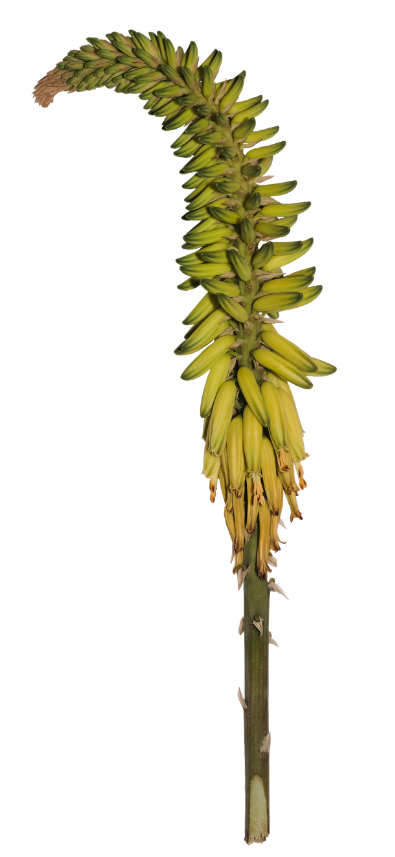
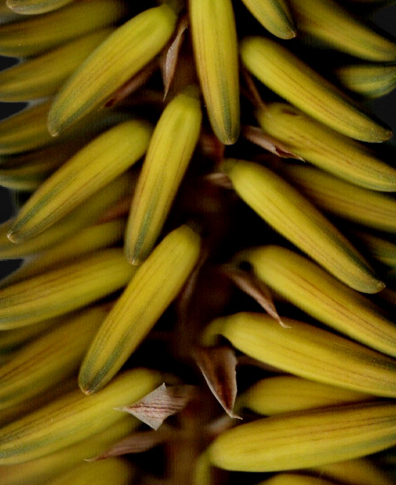
Aloe vera forms tall inflorescences that can grow up to 3 feet high.
The pale green leaves are lined with small teeth and filled with a clear gel and a bitter yellow sap.
This inner gel has been used for generations as a household medicine, applied directly to the skin to treat burns, cuts, insect bites, and irritation. It is one of the most immediate and accessible remedies in these regions. Aloe has a tall flowering stalk bearing tubular orange or reddish blossoms which are also edible.